
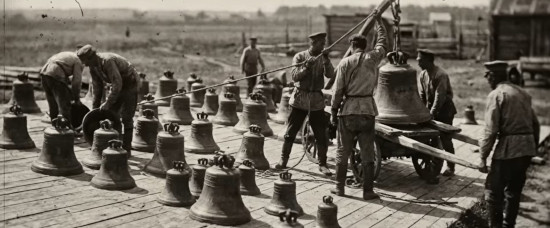
Church bells
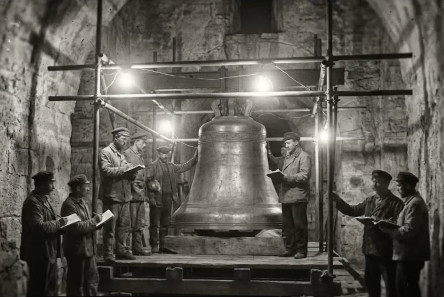
Church bells were originally made in China, then India, then Europe. Bells also had mundane uses, like in Greece and in Rome, where they were used to announce the opening of the market stands. When larger bell forms came to be, bronze from the Campania area was believed to make the best bells. In fact, the Italian word for “bell campana”, is derived from “vasa campana”, i.e. “vase from Campania”, as their shape is that of an upside-down vase.
Legend has it that Saint Paulinus, Bishop of Nola (354-431 AD) invented the “campana”, likely for use during Christian celebrations. Over time, the bell has been identified as a symbol of unification and has increasingly become a religious and social emblem. The power of bells was escalated by the fact that the Catholic Church had considered them “res sacrae”, blessing them and imprinting inscriptions on them that spoke of communion between heaven and earth.
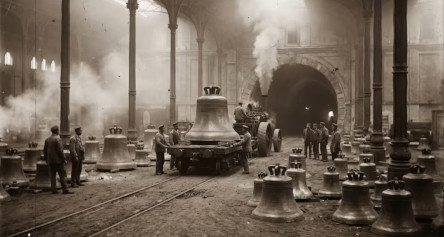
This attribution of extraordinary powers led some historical figures as Saladin, Muhammad and Calvin to forbid the use of bells. From the tall Muslim minarets, calls to prayer are projected by muezzins rather than by bells.
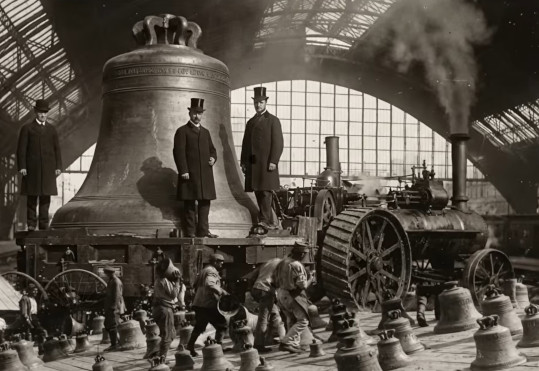
The first bell crafters were probably monks. Although initially they were made of wrought iron, even for the churches, later, by casting in bronze, a copper and tin alloy, they were made to be more melodious and harmonious. Eventually, bell casters became such expert and refined craftsmen that sculptors during the Renaissance trusted only them to achieve the results they wanted for their pieces in bronze.
Improving sound quality characteristics became a quest later on, though already by the 17th century, “bell scales” created in Europe were able to link musical feedback to the proportions of each bell.
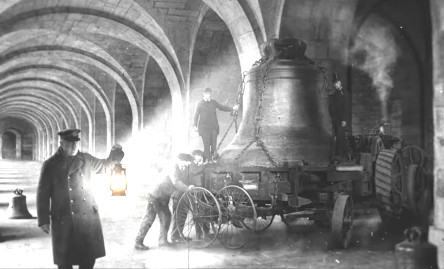
Today, voices of Angels still emanate in the bell town Agnone, in the heart of Italy, where the art of casting sacred bronzes has persisted for a thousand years.
Many bells made before 1750 have a sound that resonates with the human heart and solar plexus chakras.
Stress reduction church bells made before 1750, ringing between
100-130 Hz, many were destroyed allover Europe during 1929-1945.
Optimal therapeutic effects around 112 Hz:
Those earlier bells contained trace silver 0.00.8%, and gold 0.003%. Silver conducts divine breath. Gold holds eternal tone. Together with copper the sound will touch your soul.
Did traveling Tartarian casters, taught the used techniques, sharing formulas, always moving west from territories labeled Tartaria on maps? Was this Tartar metallurgical Technology?

The precise trace metal ratios, the timing, the astronomical considerations made these bells like acoustic medicine. These population-scale therapeutic instruments rung daily, multiple times, at specific frequencies, thereby maintaining population mental health through passive acoustic exposure.
Listening to it, made people feel calmer, think clearer, be less fearful, because these frequencies could heal the human body, elevate consciousness, and potentially disrupt the control systems being implemented by a government.
The clocks in the church of St. Mary in Lübeck, Germany, contain 3 bells from before 1750. You can feel their sound near your heart. The other 9 only in the head or throat.
Click here and check it for yourself!?!